Ghana’s Education Crisis: How Government, GES and the Ministry of Education Continue to Fail Teachers
There is a dangerous hypocrisy at the heart of Ghana’s education system. Every year, governments stand on national platforms to praise teachers as nation builders, yet many of the same teachers continue to suffer under policies, delays and neglect created by the very institutions meant to protect them. If the truth must be told, then it must be told boldly: teachers are carrying Ghana’s education system on their backs while being abandoned by the Ghana Education Service and the Ministry of Education.
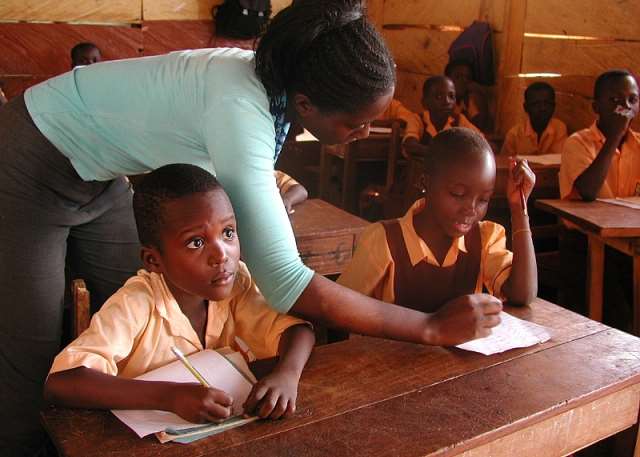
The public must begin asking hard questions. Why is it that teachers can be posted to remote communities without accommodation, without incentives and without the basic tools to teach, yet they are still expected to perform miracles? Why are many educators forced to spend personal money on chalk, markers, printing, transportation and teaching materials while state agencies speak of reforms and transformation?
One of the biggest scandals in the sector is the endless delays in promotions, upgrading and legitimate entitlements. Teachers complete further studies to improve themselves, yet many wait years before their qualifications are recognised. Others are promoted on paper but denied the financial benefits that should accompany those promotions. Some retire after decades of service only to face frustration in accessing benefits. How can a nation claim to value education while humiliating the people who deliver it?
Equally troubling is the issue of postings and transfers. Young teachers are often sent to deprived areas with no transparency, little support and no proper welfare systems. In some communities, teachers struggle with housing, poor roads, lack of water and weak healthcare access. Meanwhile, some urban schools remain overstaffed while rural schools are left desperate. Is placement based on planning, fairness or influence?
Another question the country must confront is whether teachers are being used as convenient scapegoats for failures caused by poor leadership. When learning outcomes decline, teachers are blamed. When examination performance drops, teachers are blamed. But when schools lack textbooks, classrooms, laboratories, ICT tools and stable policy direction, who is held accountable? Why are those in offices protected while those in classrooms are exposed?
The constant policy changes in the sector have also created confusion. New curriculum reforms, new assessment systems, new directives and new administrative burdens are introduced frequently, often without enough training or consultation. Teachers are expected to adapt instantly, no matter how unrealistic the timeline. Reform without preparation is not progress. It is disorder disguised as innovation.
There is also the uncomfortable issue of respect. Teachers are heavily regulated, monitored and burdened with paperwork, yet their voices are often ignored when major decisions are made. How can policies about classrooms be made without serious engagement with classroom professionals? No serious health reform would ignore doctors. No legal reform would ignore lawyers. Why then is education reform so often imposed without teachers?
The government, the Ghana Education Service and the Ministry of Education must answer another critical question: why do many teachers still feel poorer today than they did years ago, despite rising responsibilities and a higher cost of living? If teachers cannot live with dignity, what message are we sending to the next generation about the profession?
This is no longer only a teachers’ issue. It is a national development issue. Demoralised teachers mean weakened classrooms. Weakened classrooms mean unprepared students. Unprepared students mean a struggling future workforce. The chain is direct and undeniable.
CREP Africa believes the time has come for a national reset. Teacher welfare must become central policy, not ceremonial rhetoric. Promotions must be timely. Posting systems must be transparent. Rural service must attract real incentives. Training must precede reforms. Benefits must be honoured. Most importantly, teachers must be treated as partners, not subordinates.
If Ghana truly wants quality education, then it must stop managing teachers through neglect and start leading through fairness. Until then, every speech about educational excellence will remain incomplete.
The nation is watching, teachers are waiting and the truth can no longer be postponed.
By Mileba Godwin Kwame, President CREP Africa
0 Comments
Leave a Comment
No comments yet. Be the first to share your thoughts!