

2026 CSSPS: GHANA MUST FIX THE PROBLEM BEHIND THE NUMBERS
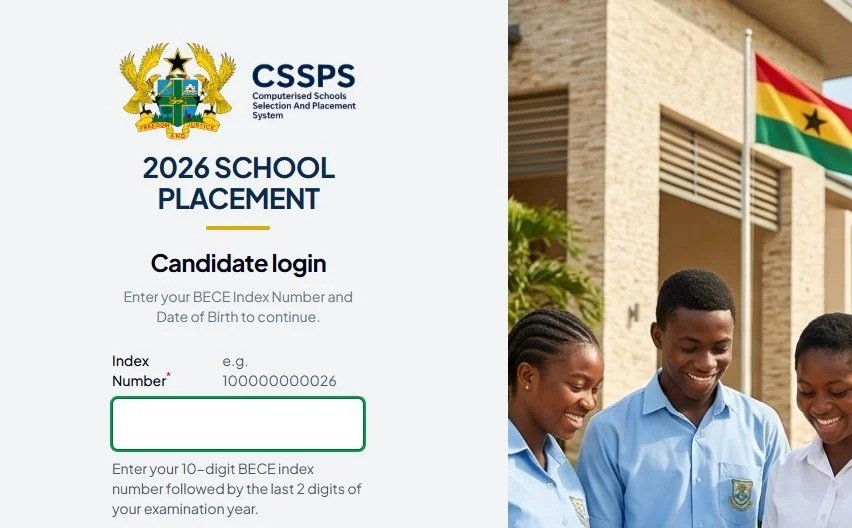
CREP Africa has taken note of the 2026 Computerised School Selection and Placement System results. The reported placement of 527,932 out of 604,567 qualified candidates, representing 87.3 percent, is commendable and reflects progress in expanding access to secondary education. We also welcome the decision to allow candidates who obtained Grade 9 in English Language, Mathematics or both subjects to access self-placement.
However, the figures reveal a deeper problem that Ghana must confront. The issue is no longer simply whether there are enough secondary school places, but whether those places are distributed across schools of comparable quality and attractiveness.
The reported 859,828 vacancies raise an important question: if Ghana has such a large number of vacancies, why are some schools overwhelmingly oversubscribed while others have thousands of spaces available?
Category A schools reportedly attracted 313,283 first-choice applications for only 76,417 vacancies, while Category C schools had 468,652 vacancies against 123,577 first-choice applications. This enormous disparity cannot be dismissed as mere preference for prestige. It reflects differences in perceived and, in some cases, actual quality, infrastructure, academic outcomes, accommodation, programmes, teaching resources and school environment.
Government must therefore move beyond the traditional approach of telling parents and students to choose schools with available vacancies. The solution is to make more schools worthy of being chosen.
CREP Africa believes Ghana needs a deliberate policy to reduce the quality gap among secondary schools. Investment should be targeted at schools that lack laboratories, ICT facilities, adequate accommodation, qualified teachers, learning materials and modern technical and vocational equipment. Strong schools should not be the only schools capable of attracting ambitious young people.
We are equally concerned about the 76,635 qualified candidates who had not secured successful placement at the time of the announcement. Government must clearly explain the status of these candidates and ensure that no qualified student is left without a meaningful pathway into secondary education.
Self-placement is a welcome intervention, but it must not become a system for simply filling leftover vacancies. Candidates and parents must receive accurate information about schools and programmes so that they can make informed choices. Students who enter through self-placement must also receive the same opportunities and support as those placed automatically.
The 57,259 candidates outside automatic placement also deserve careful attention. Providing alternative opportunities is important, but government must recognise that some of these students may have significant learning gaps. Admission should therefore be accompanied by appropriate academic support, particularly in core subjects.
CREP Africa further calls for greater transparency in the CSSPS process. The public should have access to comprehensive, anonymised data showing applications, first choices, vacancies, placements and remaining vacancies by school and programme. Such information will enable researchers, civil society organisations and policymakers to properly evaluate the system and propose evidence-based reforms.
The 2026 CSSPS results should therefore serve as more than an annual placement exercise. They should provide government with evidence for planning the future of secondary education.
Ghana does not simply need more vacancies. Ghana needs more quality schools.
If parents are confident that schools across the country offer comparable opportunities, pressure on a few Category A institutions will naturally reduce. Until then, the placement system will continue to manage the symptoms of a deeper inequality within our education system.
CREP Africa commends the progress recorded, but urges the Ministry of Education to use the 2026 data to address the structural inequalities driving school selection and placement.
Every child deserves a place in secondary school, but every child also deserves a quality education regardless of the school in which they are placed.
0 Comments
Leave a Comment
No comments yet. Be the first to share your thoughts!