CSSPS 2026: The Data Points to a Deeper Problem in Basic Education
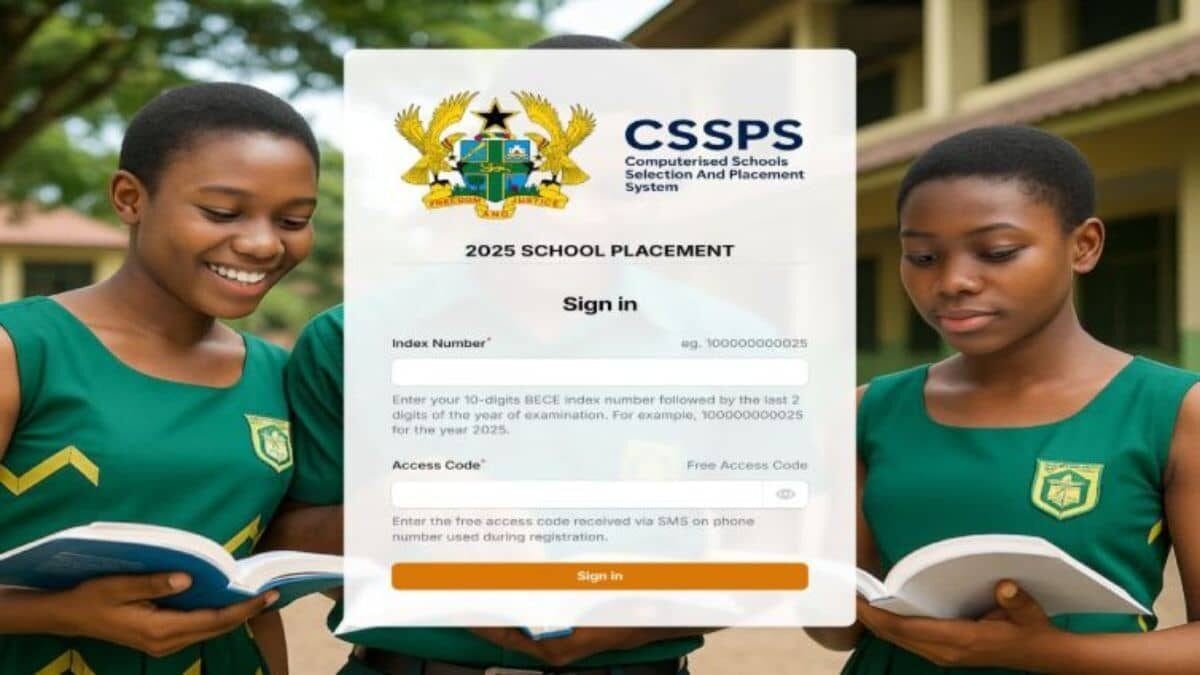
The 2026 CSSPS results should not be discussed only as a problem of school placement. The figures raise a more fundamental question about the quality and financing of basic education in Ghana.
A total of 623,072 candidates sat the 2026 BECE, while 604,567 qualified for placement. Out of these, 527,932 candidates were successfully placed automatically, representing 87.3 percent.
The demand for schools is even more revealing. 313,283 candidates selected Category A schools as their first choice, compared with 176,614 for Category B schools and 123,577 for Category C schools. At the same time, the country had 859,828 declared vacancies across the three categories.
This means Ghana does not simply have a shortage of school places. The bigger issue is the unequal demand for available places.
Why are so many parents and students competing for a relatively small number of schools while hundreds of thousands of vacancies remain in other schools?
That question cannot be answered by blaming parents for being selective.
Parents are responding to what they see and experience. They associate certain schools with stronger academic performance, better facilities, stronger teaching, discipline, opportunities and better prospects after secondary education. The concentration of demand is therefore telling us something about public confidence in the quality of our schools.
This is where the financing of basic education becomes important.
A child's performance at the BECE is not determined in the few months before the examination. The foundation is built throughout primary and junior high school. The quality of teaching, availability of textbooks, classroom conditions, access to ICT, science and mathematics resources, teacher availability and the general learning environment all matter.
If children in different communities receive significantly different educational opportunities before they sit the same BECE, we should expect differences in their outcomes and subsequently in their chances under the CSSPS.
Government's 2026 education budget is substantial, with GH¢33.3 billion allocated to the Ministry of Education and GH¢9.9 billion to GETFund. The issue, therefore, should not be reduced to whether government is spending money on education. We must examine where the money goes, how it is distributed, when it reaches schools and whether it is addressing the areas of greatest need.
A school in a deprived community cannot necessarily be expected to produce the same outcomes as a well resourced school if both receive similar levels of support despite facing very different challenges.
Equal allocation is not always equitable financing.
The CSSPS data should therefore be used as an education planning tool. The high demand for Category A schools and the large number of vacancies in Category B and C schools should trigger a serious assessment of differences in school quality, facilities, teaching capacity and academic outcomes.
We also need to look at what happens before students reach the CSSPS. If basic schools continue to struggle with inadequate learning materials, infrastructure gaps, teacher shortages and weak foundational literacy and numeracy, the inequalities will continue to follow children into secondary education.
CREP Africa believes the CSSPS debate must therefore go beyond placement numbers.
We need to ask why Ghana has thousands of available secondary school places but such intense competition for particular schools. We need to ask why some schools have become highly desirable while others struggle to attract students. Most importantly, we need to ask whether our investment in basic education is sufficient and properly targeted to give every child a fair opportunity before they reach the BECE.
The CSSPS is not the beginning of the problem. It is where many of the inequalities created earlier in the education system become visible.
If we want better CSSPS outcomes, we must start by building stronger and more equitable basic schools.
0 Comments
Leave a Comment
No comments yet. Be the first to share your thoughts!